
Climate change proposals (INDCs) expected to cover over half of global emissions in June, after only 28% in March

indc_big

The updated results of NewClimate Institute’s research to track the preparation of INDCs are now published.

VIEW THE RESULTS

The first wave of submissions of Intended Nationally Determined Contribution (INDC) to the UNFCCC’s INDC portal due in March is likely to cover only less than a third of global emissions, but already in June they are likely to reach over half, as now revealed by research from NewClimate Institute. This allows for a constructive negotiation process on the contributions during 2015.

All countries have been asked to present an emissions reduction proposal, which would ultimately be included in a new international climate agreement in December 2015. Additional proposals have been announced, but not formally submitted, for example by China, Chile and the Dominican Republic. The Lima Call for Action encouraged countries “in a position to do so” to submit their INDCs by 31 March 2015. A second implicit submission deadline is 01 October 2015, after which submissions are still allowed but will not be included in the UNFCCC’s synthesis report, which will be made available to Parties in time for the 21st Conference of Parties in Paris, December 2015. Countries able to do so are encouraged to submit their INDCs well in advance of this date.

Research from NewClimate Institute for UNFCCC and UNDP has tracked the progress of INDC preparations worldwide, and collected insights and lessons learned from the various preparation approaches. The second round of results were published on 30 March 2015 and include information on the progress that 97 countries have made in the preparation of their INDCs. These results are updated on a regular basis.

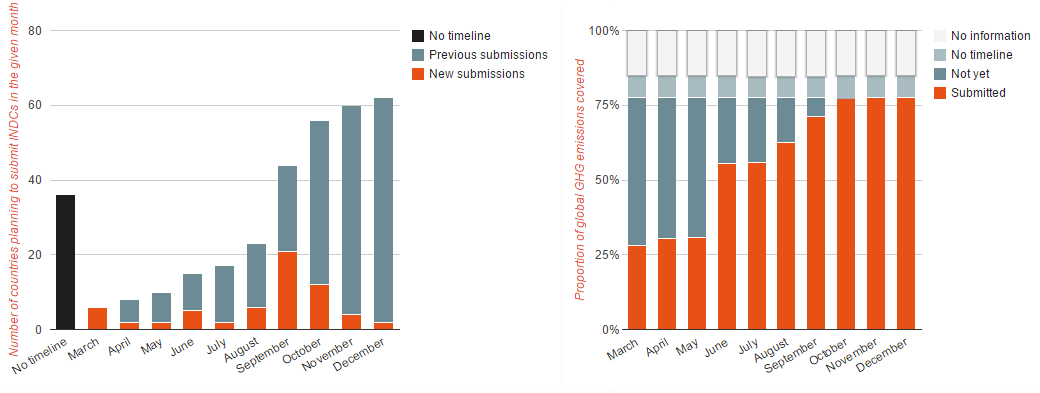
Figure 1 shows that very few countries have submitted or intend to submit before 31 March 2015. But as these countries include the EU and the USA, they together cover roughly 28% of global emissions. Coverage will reach over half of emissions around June and over three quarters in October.

Figure 1: Timeline showing the accumulated number of INDC submissions in each month and the proportion of global emissions covered

How does this submission schedule impact the negotiations on a future international agreement on climate change? The views diverge between two broad perspectives:

Some argue for an early and precise submission; countries should put forward their offers as soon as possible so that during the course of 2015, offers can be analysed, aggregated and strengthened if needed.

Others argue, that countries should put forward their firm offers later, because they hardly change once made. For example, since 2009 we know that the Copenhagen pledges are in aggregate not sufficient, but no single large emitter has strengthened its target since. It is unlikely that a target that was either announced by a president or that was a result of a long stakeholder consultation would be changed significantly during an international negotiation process.

An ideal scenario, in-between these two views, would be a staged approach, where countries very early in the process announce relatively vague targets that leave room for changing ambition in a negotiation phase during 2015.

In fact, this is actually what is happening:  The EU has put forward “at least” a 40% reduction, the USA will present a range of percentage reductions and China has announced, but not submitted, a loosely defined peak year. This will now enable a constructive negotiation process during 2015, and builds hope that the remaining time can be used towards constructing an agreeable 2015 international climate agreement.

Further results from the data collection

Progress has been made in the last month: Of the countries accounted for in the results (which altogether account for 85% of global GHG emissions), the number of those not having started decreased from over 36% to below 30%. Slightly less than one third of countries have initiated the national discussion, but not yet proceeded to the technical design. The share of countries in technical design has increased from 13 to 20%.

Still, 37% of responding countries, but covering only 7% of global emissions, indicated that they have not yet set an internal timeline for their submission.

This update confirms that timing is the most significant of the challenges that countries face in the preparation of their INDCs; approximately 88% of countries feel challenged by the short timeframe available for the process. Other major challenges reported were lack of certainty and guidance on what to include in INDCs (73%), limited expertise for the assessment of technical options (71%) and difficulty to secure high-level political support (66%).

Despite the challenges faced with limited expertise, less than a quarter of countries have already received international support specifically for the preparation of their INDCs. More than a quarter of countries indicate that they are still applying for international support.

The update also confirms, that countries have indicated on a large majority that the INDC process has afforded the country multiple opportunities, specifically, the enhanced engagement of stakeholders in planning and improved domestic and international communication on climate change issues. Importantly, 76% of countries report that their INDC preparations have helped to accelerate national climate change policy processes. These benefits are expected to become even more tangible in the coming months as countries continue to more advanced stages in their INDC preparations.

A wide range of INDC types can be expected from countries’ submissions. Approximately two thirds of countries report that their INDCs will include a long term goal for GHG emissions, whilst it is also clear that most countries intend to include a mixture of components including non-GHG related outcomes, specific policies and actions, and broader institutional development. Furthermore, over half of countries report that climate change adaptation plans will form a major component of their INDC.

The full results, aggregated at the global and regional level, are available to browse.


Contacts for further information: Niklas Höhne, Markus HagemannThomas Day

Climate change: at last a breakthrough to our catastrophic political impasse?

Expecting the Paris talks to succeed is a pious hope: but the Oslo principles, launched today, argue that governments are already in flagrant breach of their legal obligations to the planet

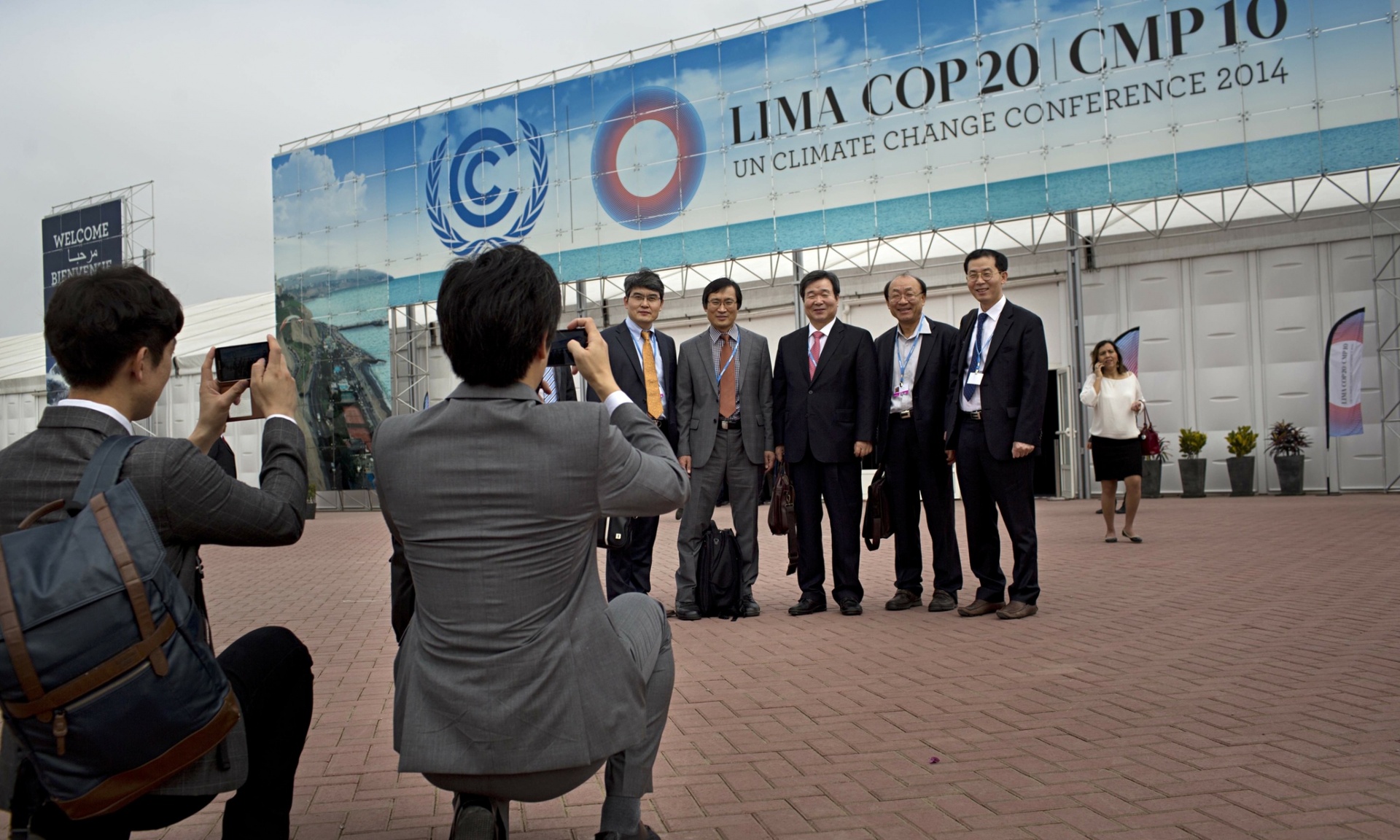
climate-change-conference‘The dismal pace of international negotiations is why the Guardian has thrown its weight behind a divestment campaign.’ The South Korea delegation are all smiles at the 2014 UN climate change conference in Peru, intended to produce a draft deal to be adopted in Paris in December. Photograph: Rodrigo Abd/AP

Today a group of eminent jurists accuse governments and enterprises of being in clear and flagrant breach of their legal obligations on climate change – under human rights law, international law, environmental law, and tort law.

Human ravaging of our planet and climate through relentless fossil fuel extraction and greenhouse gas emissions is undoubtedly the defining existential challenge of our time. Our collective failure to commit to meaningful reductions in emissions is a political and moral travesty, with catastrophic implications, particularly for the poorest and most marginalised, domestically and globally.

The dismal pace of international negotiations – and the prospect of yet more disappointment at the UN Paris conference in December – is why the Guardian has thrown its weight behind a divestment campaign, pressurising moral investors to take a stand against those responsible for the greatest emissions. After all, two-thirds of all greenhouse emissions come from just 90 coal, oil and gas companies.

But in the Oslo Principles on Global Climate Change Obligations – launching in London today – a working group of current and ex-judges, advocates and professors, drawn from each region of the world, argue that any new international agreement will just be a coda to obligations already present, pressing and unavoidable in existing law.

What the Oslo principles offer is a solution to our infuriating impasse in which governments – especially those from developed nations, responsible for 70% of the world’s emissions between 1890 and 2007 – are in effect saying: “We all agree that something needs to be done, but we cannot agree on who has to do what and how much. In the absence of any such agreement, we have no obligation to do anything.” The Oslo principles bring a battery of legal arguments to dispute and disarm that second claim. In essence, the working group asserts that governments are violating their legal duties if they each act in a way that, collectively, is known to lead to grave harms.

Governments will retort that they cannot know their obligations to reduce emissions in the absence of an international agreement. The working group’s response is that they can know this, already, and with sufficient precision.

There is a clear answer to the question of each country’s reasonable share, based on a permissible quantum of emissions per capita that never threatens the perilous 2C mean temperature increase that would profoundly and irreversibly affect all life on earth. This reasonable share is what nations owe on the basis of their common but differentiated responsibilities for contributing to climate change. The Oslo principles duly incorporate mechanisms to accommodate the differential impacts and demands on nations and enterprises, particularly in the least developed countries.

Backed by distinguished international lawyers, professors and judges, the principles are a template for courts, advocates and lawmakers to act swiftly, embodying the urgency, conviction and black-letter reasoning required if humanity is to turn the corner before it is too late.

The document is the product of an independent, rigorous, multi-year effort led by Yale University’s Professor Thomas Pogge, and Jaap Spier, the advocate-general of the Netherlands supreme court. It is championed by, among others, Antonio Benjamin, the Brazilian high court justice; Michael Kirby, a former Australian high court justice; Dinah Shelton, a former president of the inter-American commission on human rights; and Elisabeth Steiner, a judge at the European court of human rights.

These principles deserve detailed consideration by lawyers, scientists, advocates and – critically – the policymakers engaged in last-ditch negotiations in Paris in December to divert us from the path towards climate catastrophe. They provide some opinio juris that allows judges to prohibit conduct that, practised by many or all states, will cause enormous damage to people and the planet.

But the working group’s core message is that we simply cannot wait in the pious hope that short-term-minded governments and enterprises will save us; and that when we act it must be on the basis of equity and justice, according to law. Every year that we miss increases the challenge and risk. We’ve squandered decades already, and our window for action is closing. We must act now.


Source: theguardian

Key Elements for Success on Climate Change Mitigation at COP21 in Paris

SDSN plan 2015 1-4

We are out of time and we need to tackle the solutions with difficult decisions, population targets, zero meat consumption, degrowth, “ecological economy” buffer for the unknown, war aspects, plastic pollution relation/contribution to sea temperatures (oceans asthma), regional zero carbon show case study, energy justice, climate and human rights, anti-austerity, placemaking, consumption targets, urban farming, green roofs and walls, time efficiency, Global AirQuality together with Climate Action Pledges. “NO Climate Change plan alone without Sustainable Development Goals”~Climate Change Centre Reading (CCCRdg)

SDSN plan 2015 5-8

Source; http://unsdsn.org/wp-content/uploads/2015/03/Key-Elements-for-Success-at-COP21.pdf


Everything you wanted to know about the UN climate talks but were afraid to ask

feature_cop21_1_main

COP 21: Road to ParisEditor’s note: 2015 is shaping up to be a pivotal year with respect to climate change as growing concern about impacts converges with a critical stage in the decades-long process of shaping an international agreement to change our trajectory. To help us all prepare for the potentially game-changing 21st gathering of the Conference of the Parties to the United Nations Framework Convention on Climate Change (COP 21) in Paris beginning Nov. 30, by reporter Fiona Harvey. This first installment answers some basic questions about the U.N. talks.

Why 2015 could be the most important year ever for curbing climate change

Climate change negotiations seem to crawl along interminably at the pace of the glaciers they are meant to protect, with little perceptible progress as meeting follows meeting and conference follows lackluster conference. But this year we are seeing remarkable momentum building toward a historic conference in Paris in the closing days of 2015, by the end of which we will either have a new international agreement on cutting greenhouse gas emissions, or we will have seen the last of truly global efforts to strike a deal on saving our planet.

We began the year with the outcome of Lima, last December’s United Nations gathering at which delegates drafted the outline of such an agreement that would come into force starting in 2020. That in turn followed a landmark deal between the U.S. and China in November to set limits on their greenhouse gas output. By the end of spring, all of the world’s major economies should be coming up with similar plans. Then, after some months of considering these proposals, and as 2015 ends, Paris will host COP 21 — the most important meeting on global warming since the Copenhagen talks six years earlier. What is decided there will determine the future of Earth’s climate for decades to come.

What is supposed to happen in Paris?

Governments will meet for two weeks to hammer out a new global agreement that will establish targets for bringing down global greenhouse gas emissions after 2020. Both developed and developing countries are expected to bring stringent goals to the table: absolute cuts in greenhouse gas emissions for industrialized countries, and curbs or relative reductions — such as cuts in CO2 produced per unit of GDP — in the case of poorer nations.

Why after 2020?

The world’s major economies, and many smaller ones, already have agreed on targets on their emissions up to 2020. These were settled at the Copenhagen climate summit in 2009, which marked the first time both developed and developing countries had agreed on such aims at the U.N. But that meeting was overshadowed by scenes of chaos and bitter fighting, so the 2020 targets — while still valid — could not at that time take the form of a full international and legally binding pact. The hope is that Paris will see less discord and a more constructive approach to continuing action on emissions to 2030 and beyond.

What is at stake?

With the publication of the fifth report by the Intergovernmental Panel on Climate Change in 2013–14, we know more about the science of climate change than ever before, and what we know is troubling. The research embodied in that report put it beyond doubt that the climate is changing under human influence, and warned of the dire consequences — in the form of widespread droughts, floods, heat waves and other weather extremes — if greenhouse gases are left unchecked.

What is also at stake is the future of international action on global warming. As the Copenhagen summit showed, there are deep rifts among leading countries and among populous blocs over what action should be taken, by whom and how quickly, and how to pay for it.

The U.N. process of negotiations on a global accord has been going on for more than 20 years, since the first IPCC report in 1990 summed up our knowledge of climate science and concluded the world should be seriously concerned. That led to the U.N. Framework Convention on Climate Change, signed by virtually all countries in 1992 and committing them to make efforts toward “preventing dangerous anthropogenic interference with Earth’s climate system” without specifying what or how much they should do. The Kyoto protocol of 1997 was intended to flesh out those preventive actions by stipulating cuts in emissions from industrialized nations, but that collapsed when the U.S. Congress refused to ratify the protocol because it did not impose emissions targets on developing countries such as China. There followed years of stagnation in the talks, until at Copenhagen in 2009 major developed and developing economies agreed jointly for the first time to cut their emissions or curb their rise, respectively.

After the damage done at Copenhagen, the talks limped on. But the process is fragile. If Paris witnesses scenes of discord and high drama anything like those of 2009, and if there is no clear outcome, it is hard to see that faith in the U.N.’s ability to hold nations together on this issue could survive.

What should governments agree on?

They should agree on post-2020 emissions targets for all the leading economies, and less stringent actions on emissions for all nations. Three of the leading players have already set out their intended emissions targets, which bodes well for the outcome of Paris. The European Union has pledged to cut its greenhouse gas emissions by 40 percent, compared with 1990 levels, by 2030. By 2025, the U.S. will cut by 26 to 28 percent, compared with 2005 levels. And China will ensure that its emissions peak by no later than 2030.

Will these targets be enough?

No. After nations have submitted their proposals for cuts or curbs, due to the U.N. in April, the plans will be subject to close scrutiny for several months to give all countries a chance to judge them. There is a degree of gamesmanship here: No country wants to pledge too much too soon, lest it give away a competitive advantage. The results of the scrutiny will be a key part of the talks in Paris and could be a stumbling block to agreement.

This all sounds depressingly familiar. Haven’t we been here before with Copenhagen?

There are some reasons to be cheerful. Copenhagen did produce an agreement, though not in the full legal form many countries would have liked. Officially, at least, the world is committed to meeting those aims by 2020. So if Paris produces a fresh agreement lasting into the 2020s, it is a step forward.

What legal form will an agreement take?

We don’t yet know. There are three main options on the table, laid out at the U.N. conference in Durban in 2011 at which it was agreed that the Paris meeting should take place: “a protocol, another legal instrument, or an agreed outcome with legal force under the convention applicable to all parties.” The third is the most likely.

What does that mean?

We don’t quite know that, either. Some countries take it to mean that any targets agreed at Paris will be legally binding on the countries adopting them, so countries could be subject to international penalties if they are not met. Others argue that the framework agreement — a core agreement setting out the principle that countries must take on post-2020 targets — could be legally binding at an international level, while the targets themselves would be recorded separately and so not strictly binding under law.

The question of the legal form of an agreement has been a vexed one at these talks, and has a checkered history. The Kyoto Protocol of 1997 was fully legally binding under the foundation treaty, the UNFCCC, and signed by the U.S. and nearly every other country. But that meant nothing in practice when the U.S. Congress immediately refused to ratify it and left the protocol in limbo. Other nations that did ratify later reneged on their commitments. None has suffered any sanctions as a result.

Copenhagen’s “political declaration,” outlining the pledges on emissions made by the world’s biggest economies, had to be relegated to an unofficial appendix in the legal outcome of that summit, and so was derided by some. But, though technically it had less legal force than Kyoto, it is at least still in place six years later and countries are still committed to meeting those pledges by 2020. It also forms the basis of the Paris talks.

Paris will not produce a fully articulated treaty like the UNFCCC — there is not enough time or appetite for that — but as long as it produces a definite outcome, with all of the major parties agreeing to targets even if they are not legally enforceable in the strictest sense, then it will represent significant progress and should be enough to keep the U.N. process intact.

What if the talks collapse at Paris?

That is likely to mark the effective end of international action on the climate coordinated by the U.N.

There are divergent views on the centrality of the U.N. talks to preventing dangerous climate change. These are “top-down” talks: Governments decide at an international level how much of an emissions reduction they will contribute and draft national policies to cascade this through their economies. An alternative is the “bottom-up” strategy, which posits that businesses and civil society organizations are more effective in taking prompt action and will do so in their own interests while governments still argue over semicolons in an international treaty.

Ultimately, these two approaches are closely linked. Top-down targets can spur bottom-up actions, while successes in bottom-up projects can encourage governments to be more courageous in setting national climate strategies. The reverse is also true: Without top-down negotiations, some companies are likely to see a commercial advantage in acting as a free rider, stalling on emissions cuts and refusing to take part in bottom-up actions.

So it is likely that some element of both will be necessary. The U.N. is not the only top-down forum: the U.S. leads the Major Economies Forum, and the G7 and the G20 also discuss climate actions. But the U.N. is the only arena that draws all developed and developing countries together and gives small nations a voice to challenge the biggest.

And after Paris?

That is anybody’s guess. No sooner had President Obama, late last year, toasted his deal on emissions with the Chinese president than Republicans vowed to strike it down. Any commitment made now for action until 2025 or beyond, in any country, runs that risk.

What can go wrong?

Lots. Although China has set forth its commitment, other key developing countries — India chief among them — have yet to do so, and may stretch the deadline. The process by which countries will review each other’s targets between now and the Paris gathering is also fraught with uncertainty, and it is not clear what will happen if countries cannot agree how to judge the targets.

Another key question is over finance. Developing countries were promised at Copenhagen at least $30 billion in “fast-start financing” by 2012 to help them make the investments needed in low-carbon infrastructure and begin adapting to the effects of climate change. That promise was broadly achieved — but by 2020, those finance flows are supposed to reach $100 billion per year. Where will the money come from? Rich countries are adamant that only a minor amount will come from their taxpayers, and the rest from the private sector. Poor countries are demanding more, and not cash redirected from existing aid budgets. It may be possible to find some middle ground, but this could be a breaking point.

Paris will be a crunch conference in every sense. The fragile U.N. process could emerge resurgent if nations can come together, or it could be battered to an effective end. Either way, global emissions are likely to continue rising for years more, increasing the risk that warming will exceed the 2 C mark that scientists posit as the threshold beyond which climate change becomes irreversible. Paris will not be enough in itself to prevent that, but it could go a long way to deciding our fate. View Ensia homepage


This article originally appeared at Ensia.com.

Car-Free Days UK participation in the National Climate March, London 7th March

Why CCCRdg has launched a campaign for a national
“Monthly Car-Free Work-Day in the UK”.

Reflecting on BBC4´s “Climate Change and Numbers”, Climate Change Centre Reading (CCCRdg) has launched in Reading a campaign for a national “Monthly Car-Free Work-Day in the UK”;

Following the Deep Decarbonisation route set out for a successful climate agreement in Paris at COP21, CCCRdg hope the National Climate March, London on Saturday 7th will stake out actions necessary to divest from dirty energy that not only adds to already high greenhouse levels but also pollutes the air, our common realm, which directly and utterly affects our health. The right thing to do in order to comply with changing to zero carbon fuels is to slow down our “business as usual” (BAS) behaviour.

With a regular Car-Free Work-Day, can UK take a lead on behaviour change divesting away from fossil fuels? That is the question.

The People’s Climate March last September was huge. With around 40,000 people marching in London, 400,000 in New York and many thousands more taking part across the world, together we made history.

2015 needs to be even bigger. The climate talks in Paris this December are crucial if we’re going to protect all that we love. Our movement is growing, and we’re more diverse and determined than ever before.

With a regular Car-Free Work-Day, can UK take a lead on behaviour change divesting away from fossil fuels? That is the question.

CFDUK

Across the UK people are already building change – from divestment of funds which prop up the fossil fuel industry, to front-line communities fighting unsustainable energy extraction and fracking, through to those paving the way for a transition towards a 100% renewable energy future which would bring about an estimated one million new climate jobs in the UK alone. 

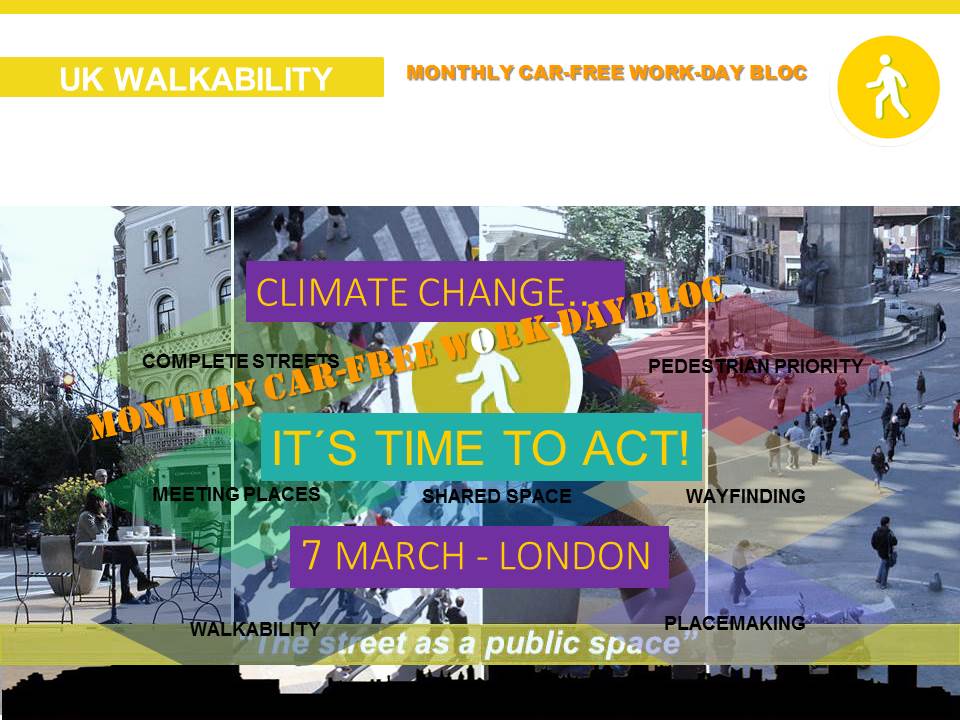
Meet the CAR-FREE WORK-DAY BLOC on the 7th March to make the link between climate change and switching to zero carbon fuels. Put the climate on the agenda ahead of the 2015 General Elections and the December 2015 Paris United Nations COP21 climate talks.

ATTEND THE CAR-FREE WORK-DAY BLOC RALLY OUTSIDE PARLIAMENT ON 7TH MARCH https://www.facebook.com/events/632679746859395/

How to fins us: The Car Free Days UK Bloc will be under the Protecting Our World theme (No.6) http://www.timetoact2015.org/#!blocs/c7hs Look out for the Orange flag to find the general area -then we’ll be there with the CAR FREE DAYS UK BANNER

Details

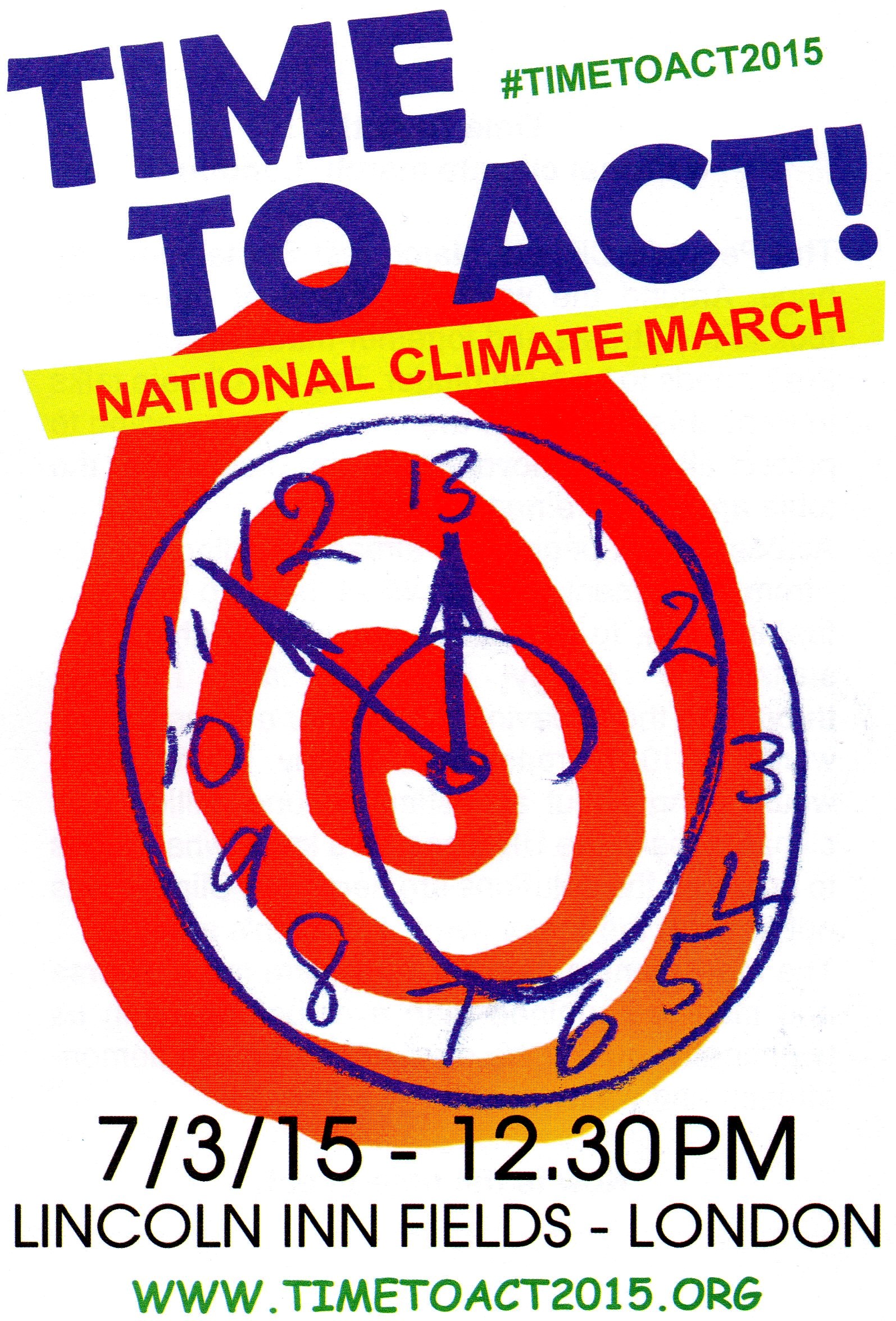
12.30pm, Saturday 7th March

Lincoln’s Inn Fields [map]

Nearest tube: Holborn

Join the facebook group here

Let´s work together to help achieve this, it will be an important step in solving and laying a just and fair developing pathway, switching to zero carbon fuels.

[A regular car-free work-day in Reading and UK could fuel an International monthly Car-Free Work-Day which could be an astonishing example of traffic development and public realm. Reading has great potential to embrace the sustainable pathway and become a British role-model in climate change (the air is our all urban common) to honour a successful climate change agreement taking place in Paris December 2015.]

And together let’s continue to power up and celebrate our movement – locally, nationally and internationally – throughout 2015, and beyond

Call for Stewards #TimetoAct2015

Ki Price
Ki Price

Call for Stewards

You might have heard of this big climate march we’ve been working on called Time To Act on 7 March.

It’s shaping up to be an exciting day, and as numbers are rising we’re all the more grateful for many more helping hands. This march is going to be owned by the people and made by the people, and to that end we we need a team of people that know how to look really, really good in fluorescent yellow. Naturally, you came to mind.

Please come and join me at a Steward Briefing on Wednesday 4 March at the Basil Jelicoe Community Centre (nearest tube Euston) from 6:30 – 8:30 pm.

The address is Drummond Crescent, Greater London NW11

It will be an opportunity for us to break into teams with our Lead Stewards and to get an overview of how we’re going to work together on the day, and to answer any questions.

If you haven’t done so already please complete the Steward form so we know you’re up for it. You don’t need to have had masses of stewarding experience before, but you do need to know how to look good in fluorescent yellow. Please ask all your friends.

See you on the 4th, and thanks again!

The Time To Act volunteers team

7 MARCH – Join the Car-Free Work-Day Bloc @ Time To Act National Climate March!

In our efforts to motivate as many people as possible to leave the car for a day and join in our Car-Free Days, Climate Change Centre Reading (CCCRdg) has taken a huge lap forward by campaigning for Car-Free Days until the end of the year.

Yes, we are proud of announcing CCCRdg supporting the Join the Car-Free Work-Day Bloc @ Time To Act National Climate March!

BREAKING: Please see our press release below, we hope you will find the piece interesting,

Climate Change – It’ s time for decisions now! not waste billions on campaigning.

The Future of Places

Join us at the Car-Free Work-Day Bloc on the Time to Act Climate demonstration on 7th March!

Details

12.30pm, Saturday 7th March

Lincoln’s Inn Fields [map]

Nearest tube: Holborn

Join the facebook group here

Let´s work together to help achieve this, it will be an important step in solving and laying a just and fair developing pathway, switching to zero carbon fuels.

Learn about the fossil fuels problems, that causing climate change in our local community and further afield, and what we in the local community are doing, and can do to help tackle such matters.

2015 CHANGE will honour the 2-degree Celsius limit as a limit to safeguard the world environment in Togethernessship 😉

BREAKING: CCCRdg has launched a campaign for a national “Monthly Car-Free Work-Day in the UK”  

A regular car-free work-day in Reading and UK could fuel an International monthly Car-Free Work-Day which could be an astonishing example of traffic development and public realm. Reading has great potential to embrace the sustainable pathway and become a British role-model in climate change (the air is our all urban common) to honour a successful climate change agreement taking place in Paris December 2015.

#TIMETOACT2015

Time To Act!
National climate march, London

The peoples Climate March last September was huge. Around the world hundred of thousands took to the streets and together made history.
2015 needs to be even bigger. The UN climate talks in Paris this December are crucial if we’re going to protect all that we love. So far the pledges on the table are nowhere near enough.

Time To Act 2015

Across the UK people are already building change – from divestment of funds which prop up the fossil fuel industry, to frontline communities fighting unsustainable energy extraction and fracking, through to those paving the way for a transition towards a 100% renewable energy future which would bring about an estimated one million new climate jobs in the UK alone. We know what needs to be done, the solutions are here now. Climate has got to be at the top of every politician’s agenda.
The movement is growing, and we’re more diverse and more determent than ever before. Join us two months before the election for a mass demonstration and wake-up call.
Sign up in our Car-Free Work-Day Bloc march on the 7th March to make the link between climat change and switching to zero carbon fuels. Put the climate on the agenda ahead of the 2015 General Elections and the December 2015 Paris United Nations COP21 climate talks – https://www.facebook.com/events/632679746859395/

Now is the time to act.


Ecological Economics

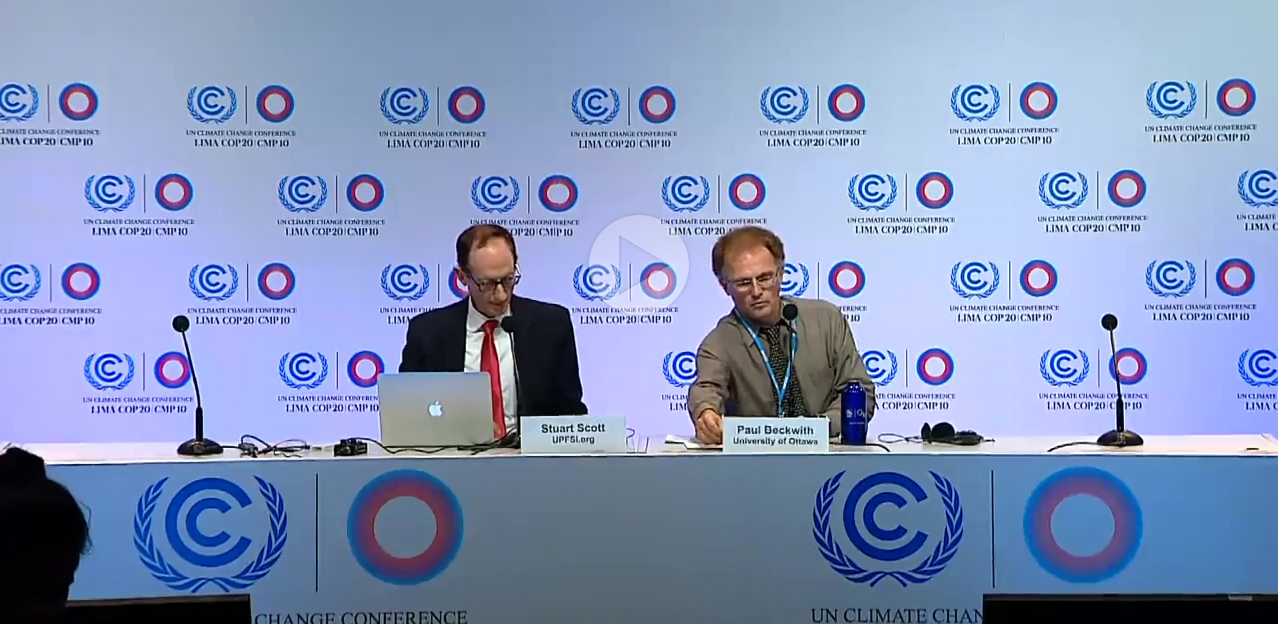
On behalf of Climate Change Centre Reading, I urge you to watch this, Top video of what is happening now with the planet featuring Professor Paul Beckwith, who was in Peru in Dec. 2014 at the UN Climate Change Conference with the Arctic Methane Emergency Group. Now methane is being released in record amounts from various places around the planet. #climatechange #methane #abruptclimatechange

Arctic_methane_emergency

http://unfccc6.meta-fusion.com/cop20/events/2014-12-06-12-00-abibimman-foundation-arctic-methane-emergency

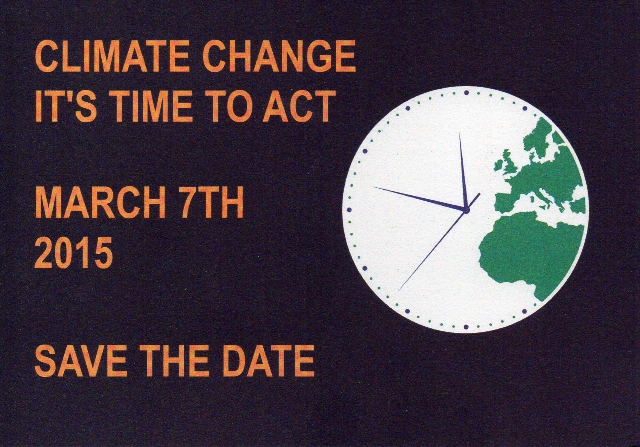
CLIMATE CHANGE IT´S #TIMETOACT2015 – MARCH 7TH – SAVE THE DATE

#TIMETOACT2015

Every day more and more people are waking up to climate change. What scientists predicted decades ago is happening right now. And we have little time left to advert catastrophe. But those in power have not yet woken up, or are unwilling to act.

On March 7th, two months before the election, we will take to the streets of London in a creative mass action. We will set out clearly what must happen now to cut emissions and build a better future. No more half-hearted promises: it´s Time to Act on Climate change.

Join the Car-Free Work-Day Bloc @ Time To Act  National Climate March!
Event – https://www.facebook.com/events/632679746859395/

2015 is a crucial year for the climate. in the UK, we must tell politicians seeking election that there is no mandate for climate-wrecking business as usual. Then at UN talks in Paris in December, governments will come together to strike a deal for the climate.

Our future is at stake.

Find out how you can help:
www.campaigncc.org

Welcome to Join our local facebook group “Climate Change Reading”https://www.facebook.com/groups/CCCRdg.community/