Sustainable Urban Opportunities for Dummies 2016

Sustainable Development Goals No. 11 plus No. 5 – #SDG11 + #SDG5
Vision – suggested ECO4CLIM_Rdg Climate, Innovation +Jobs Draft Strategy w/ target: Urban eco-philosophy will, in a few years, develop 50 labs across the world / empower more than 500 urban ecopreneurs / generate 3,000 green jobs and directly avoid hundreds of tons of CO2 emissions into the atmosphere.

Urbanisation and industrialisation has gradually led people away from living in natural environment depriving them of the health benefits of nature such as natural light, green views, local biodiversity, and natural landscapes.

Anyone can, contribute to a sustainable and resilient city structure as long they stay within to the city’s territorial boundaries and do not trespass it’s surrounding greenbelt. If new land is taken for development the case is lost.

The magic “Glocal” urban safe formula has formed from the perspective less is more, such as “back to the basics concept” or just “keep it simple”;

  • A healthy environment is based on healthy (100% clean) quality levels in soil, water and air, this is ecology.
  • A healthy social environment (society) is based on fundamental humane values (all living beings included) wholesome eating, living and interaction.

There are about 1000 #urban videos circulating the web
The following eight videos will explain most of it, what you are missing you can Google.


Why not support our next generation and share the hashtag #COY12
https://twitter.com/search?q=%23COY12&f=videos&src=tyah

This three minute video explains all you need to know about the 2015 Paris Agreement and how it will help to address climate change and promote the sustainable development goals (SDGs). The Paris Agreement entered into force on 4 November 2016, creating binding commitments. The video highlights the need for further ambition by governments and businesses.Track 0 is releasing an animated video - The  in a Nutshell - Inspiring decisive action on climate change, to get on track for a zero emissions future compatible with the Paris Agreement and 1.5°C limit

Over a hundred advanced Conventions, Treaties, Agreements and Frameworks have been globally agreed and put in place during 2016. We decided to take a look at a handful of simpler declarations, of thousands of papers, policies, guidelines and text documents.

In writing Climate Change Centre Reading (CCCRdg) has added 7 current general Declarations on sustainability and protection, women leaders and the global transformation, to deeply consider for local government implementation;

Basque Declarationhttp://conferences.sustainablecities.eu/basquecountry2016/declaration

10 EXCITING ANNOUNCEMENTS MADE AT EE GLOBAL 2016! – http://eeglobalforum.org/latest-news/10-exciting-announcements-made-at-ee-global-2016

UNEP – Principle 10 and the Bali Guideline – http://www.unep.org/civil-society/Implementation/Principle10/tabid/105013/Default.aspx

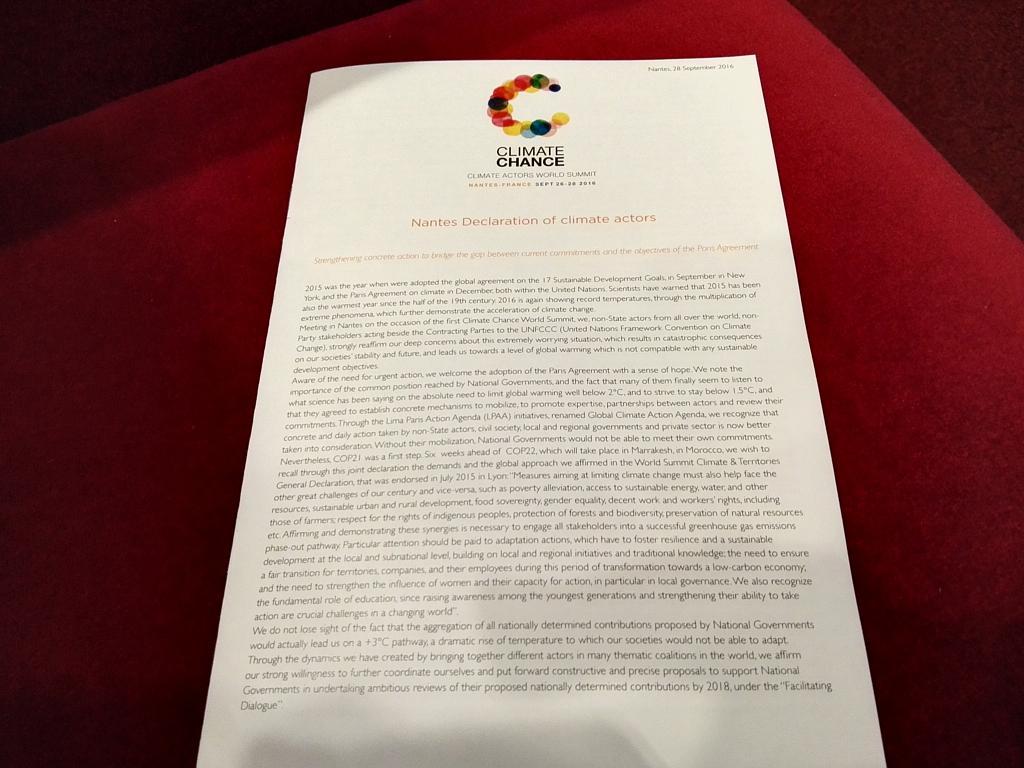
Nantes Declaration of climate actors –http://www.climatechance2016.com/uploads/media/5800c65beb61c.pdf

UNACLA Quito Declaration – http://unhabitat.org/unacla-quito-declaration

Global Climate Action Agenda – The “feminization of urbanisation” Roadmap – http://newsroom.unfccc.int/climate-action/global-climate-action-agenda

Belt and Road- New Path to Regional Development –http://www.cn.undp.org/content/china/en/home/operations/projects/south-south-cooperation/global-governance–.html

The Marrakech Vision –
http://www.thecvf.org/marrakech-vision

How can resilient cities buy us time to secure and safeguard our habitats against coming superstorms?

Based on the fact that everything is connected, how do we know which pathways to follow?

The way forward is lasting habitats CO2lutions* enhancing Garden or Wildlife Cities, car free with underground density functions where all of us take on a purpose driven keepers role. These spatial urban aerial habitats are disaster response ready of course.

43 urban innovations that could be applied to the #Reading2050 vision,
https://www2.habitat3.org/bitcache/f1afbb98fec1c3fb8c775ee7b88e4e1334ccd3c9?vid=586936&disposition=inline&op=view

END

* We also need to undertake a work programme under the CP21/New Urban Agenda framework for SDG11 + SDG5 approaches to sustainable safe development with the objective of considering how to enhance linkages and create synergy between, inter alia, mitigation, adaptation, finance, technology transfer and capacity-building, and how to facilitate the implementation and coordination of SDG11 + SDG5 approaches.


#WTPD2016 #climatechance #COP22 #innovation #cities #Climathon #CWNYC #Innovationmonth #InnoTrans2016 #Business #RE100 #IoE #Sustainability #ParisAgreement #AccordDeParis #SDG11 #Changemaker #villes #regions #smartcities #startup #energy #entrepreneur #climat #climate #renewable #economy #NetZero #EnergyStorage #sharing #BatteryStorage #Photosyntesis #SBI45 #SBSTA45 #CMA 1 #APA

Reading_ECO4CLIM – Ecopreneurs for the Climate 2016 – 28 Oct 2016 -Global

Reading_ECO4CLIM – Ecopreneurs for the Climate 2016 – 28 Oct 2016 -Global

PressRelease_Reading_ECO4CLIM – Climate Innovation +Jobs Draft Strategy Outcome Document 1 November 2016

The “Ecopreneurs for the Climate” gathered last week in 14 different countries to leverage sustainable businesses tackling climate change – Please see #ECO4CLIM_Rdg

Enclosed our initial, #ECO4CLIM_Rdg “draft strategy outcome document 31 October 2016” from the first Ecopreneurs meeting in Reading. We hope that Reading and its stakeholders will commit to a zero emissions vision together with “green” companies acting as an economic engine for the region.

Climate Change Centre Reading focus on how to reduce cities emissions as quickly as possible. More and more cities set net zero targets between 2040 and 2050. The question is no more when or how much, only how.

It has been a remarkable year with all treaties and agreements, conventions and declarations coming in place being agreed globally. With a staggering incredible development of daily new energy CO2lutions and Climate Innovations, with ongoing new climate preparedness worldwide, we believe local emissions reductions could happen much faster aided by leaders that are committed to taking the crucial right decisions. It is the local government and its stakeholder responsibility to implement zero targets decisions.

As the planet is warming and more and more refugees of food shortage are seeking urban shelter for protection, demanding right to protection, cities need not only adequate housing but adequate climate housing. The cradle of life is ecology, climate innovation for urban growth is where one can have most impact to improve soil, water and air quality for all (Permaculture principles and the unnecessary principle). What is needed is reservation, sustainable use and restoration of ecosystems and biodiversity, with the dual objective of mitigating climate change and adapting Reading region to its effects. It is essential to reduce the human footprint whilst the planet’s population is growing.

Target: Thanks to partnerships and companies’ generous contributions this eco-campaign will, in a few years, develop 50 labs across the world / empower more than 500 ecopreneurs / generate 3,000 green jobs and directly avoid hundreds of tons of CO2 emissions into the atmosphere.

Please see suggested ECO4CLIM_Rdg Climate Innovation +Jobs Draft Strategy Outcome Document 31 October 2016,
http://media1.tvb-climatechallenge.org.uk/2016/11/ECO4CLIM_Rdg-Climate-Innovation-Jobs-Draft-Strategy-Outcome-Document-31-October-2016.pdf

As the Ecopreneurs of Reading we would like to connect new climate innovation with green business. In the name of Ecopreneurs” green entrepreneurs” US are forming a British Wing (Bat) Flap for climate CO2lutions with the aim to reduce release of carbon dioxide CO2 and other toxic Greenhouse gases and prevent 100’ tonnage from leaking out in to the Greenhouse gas area causing further warming.

We address these direct implications to one day hit the Greater Reading Area as food shortages, hurricanes, disaster relief, flooding, home insurance, wildfires, water scarcity, heat waves, national security, droughts, lost wages and air conditioning #BeforetheFlood

The Global Context; Cities today occupy approximately only 2% of the total land, however:

  • 70% of the Economy (GDP)
  • 60% of Global Energy Consumption (more than)
  • 70% of Greenhouse Gas Emissions
  • 70% Global Waste

Zero vision CO2lutions are urgently needed in cities morph into Green business resource Eco systems

Suggested Innovation: Shadow Local Government to voice the people’s sustainable initiatives and create a balance between general stakeholders like business, organisations and academia. “Bridge the gap” to achieve the best possible democratic outcome for the benefit of sustainability, quality of life and long term health indicators.

“Ecopreneurs for the Climate” is rooted on the leadership of its climate organisers, working at the intersection of business and civil society in their communities; the extensive support provided by its sustainable business networks; and the wide reach of its global partners, including Impact Hub, SwitchMed, Green Shift Africa, Ecopreneur.eu, GreenEcoNet, and the NESI Forum.


For more information:

For further information, contact ECO4CLIM_Rdg’s Climate Organisers in Reading: Carl Emerson- eco4clim @cccrdg .org .uk alt. Tanja Rebel – tanjarebel @ hotmail .com

Download: PressRelease_Reading_ECO4CLIM – Climate Innovation +Jobs Draft Strategy Outcome Document 1 November 2016

Laboratory of Climate Innovation
Assessment
Objectives:
• Identify challenges arising from the changing climate: mitigation and adaptation / resilience
• Co-create enterprise solutions at the heart of the ecosystems of the green economy

3 challenges of importance to reduce CO2 emissions for Berks region as soon as possible:
• 1 urgent need 2020 is a CO2lution that can be trialled and implemented within 6 months
• 1 medium term need 2030 is a CO2lution that exist but needs to be implemented
• 1 long term need 2050 is a CO2lution that needs innovation

ECO4CLIM_Rdg draft strategy outcome document 31 October 2016 #WorldCitiesDay

#ECO4CLIM_Rdg Climate Innovation +Jobs Draft Strategy Outcome Document 31 October 2016

Ecopreneurs for the Climate in Reading Climate LAB
28 October 2016

Suggested #ECO4CLIM_Rdg Climate Innovation +Jobs Strategy

By 2020:
Empower the local government to create an inclusive accessible city (social inclusion and access to water, sanitation or electricity in high-risk areas) and shared development in accordance with the New Urban Agenda, the UN Habitat III framework. Implement new strategies to meet the sustainable development goals.

  1. Comprehensive Cycle Network
  2. Monthly Car-Free Work-Day, instigated by the Council
  3. 25% Energy Self-Sufficiency from Berkshire renewables (PV roofs rather than panels) and Energy Storage
  4. 25% Food Vegan Self-Sufficiency
  5. Complete pesticides, monsanto and shale gas extraction ban
  6. 25% of new homes Passive House or better
  7. One city area dedicated to a Net Zero district, a green city showcase area.
  8. Hydro-electric Dam up and running
  9. All street lights maximum 3000K CCT + switched off/dimmed after midnight (BLACK NETWORK)
  10. Waste collection system based on same county rules
  11. Planning for disaster response. Prepare an urban climatic emergency evacuation plan, should be preceded by skilled and realistic capacity building effectiveness drills due to post-evacuation considerations and evaluation
  12. Make sure pollution from city growth activities does not increase
    “Improve our understanding of climate risks and opportunities for innovation.
    Continue ongoing work into innovative phosphorus treatment trials for treating
    sewage effluent 2016 – 2020. Assess innovation opportunities that prevent, detect or improve our response to incidents, and build these into existing improvement projects or new research projects 2016 – 2017. Input into a review on innovative construction materials to assess whether they can improve the performance of assets, extend design life and reduce on-going maintenance costs 2016 – 2020. Update our sustainable procurement guidance and tools to incorporate the consideration of those category purchases which have a high vulnerability to climate related risks that may affect the goods, services and works we buy, seeking alternatives through innovation and market development where relevant. 2016 – 2017~EA UK”
  13. Address how existing armed forces and military reserves (civil) can become an urban stakeholder resource and partnership with the civil society and local authorities
  14. Green public institutions that have divested/invested
  15. Organic farming, Char grow, Hemp cultivation and biological corridors (BROWN NETWORK)
  16. Diverse Eco-friendly building materials and pillar construction

By 2030:
Connect regional and local city grids and networks to fulfil Agenda 2030 Global Goals. Fully developed partnership governance

  1. Car Free Town Centre
  2. Comprehensive Tram/Podcar/Monorail Network “Garden Ring”
  3. 50% Energy Self-Sufficiency from Berkshire renewables
  4. 50% Food Self-Sufficiency
  5. 50% of all new homes Passive House or better (25% of old stock)
  6. Air Quality up to WHO standards.
  7. Reading Dark Sky Status
  8. Shaded and underground open spaces
  9. Network of fire corridors, also for wildlife (GREEN NETWORK)
  10. Fully developed decrease plan in place to prevent further urban sprawl
  11. Sharing economy in full bloom
  12. Cradle to cradle “second life” product cycles
  13. Replace pipes with sponge districts to manage rain and flooding risks
  14. Existing armed forces and military reserves become a stakeholder in joint partnership with the civil society and local authorities.
  15. Landmark green vegetation cultural buildings to tackle clean soil, water and air
  16. Implementation of designed layers for restoration and safeguarding of ecosystems and biodiversity
  17. Natural urban rivers and riverbank for flood control (BLUE NETWORK)

By 2050:
Reading City – Clean soil, clean water and clean air to slow global warming

  1. 100% Fossil Free Reading
  2. Reading Garden City with Green Roofs, Shaded Biodiversity Zones, Wildlife Corridors, Incredible Edibles and the right to an allotment for every household.
  3. Comprehensive air-ship docking connectors to Tram/Podcar/Monorail Network “Garden Balloon” for regional transport, heavy duty and tourism.
  4. Covered “Walkable Urbanism” protecting against acid rains
  5. 100% Energy Self-Sufficiency from Berkshire’s renewables
  6. 70% Food Self-Sufficiency
  7. 100% of new homes Passive House or better
  8. Fully developed Climatic Emergency Evacuation Response Programme with specifically designed multi-functional usage protection zones against floods and superstorms, with capacity for 50-100:000 people.
  9. Reading a net producer to Berkshire’s energy grid
  10. Landmark green vegetation infrastructure to tackle clean soil, water, air and wildlife

Ecopreneurs for the climate” was held on 28 October in the Oakwood Centre. With the celebration of this event, Reading joined “the Global Week Green Economy and Climate Movement” which was held in 24 cities around the world, from Barcelona to Tokyo to Santiago de Chile.

In Climate Change Reading Centre’s opinion, the involvement of Reading in this global event “puts the city on the map of the carbon free economy, not only based on numbers but on people, economy and environmental sustainability” and demonstrates “Reading becoming involved in the global city agenda.” When looking at small exclusive groups like Reading 2050 it becomes clear that one cannot work in isolation. Legal frameworks and guidelines for urban sustainable opportunities are essential for a city’s prosperity.”

Carl Emerson-Dam and Tanja Rebel, organisers of the conference, explained the details of the next Conference which will be divided into two parts:

The first part a “LABoratory of Innovation Climate”, will be dedicated to the diagnosis and analysis of climate problems facing Reading, connecting the dots. The second part will consist of the delivery of the “Climate Champions Awards” at the next Climate LAB of end of March singling out sustainable projects. The awards will be divided into two categories: one for established companies and a second, for entrepreneurs with projects still undeveloped. A jury and the public attending the conference will facilitate the prizes.

To participate in the conference, you need to register on the below website and select city www.ecopreneurs4climate.org

Please note that RBC have for three years neglected to apply for the European Green Capital award, a process where you go through and assess 16 development areas to become a green city, giving access to much needed funding. Due to Brexit, there is only one window of opportunity left. European Green Capital is open until 2019

Climate Organiser – Climate Change Center Reading / ECO4CLIM_16
Contact info – eco4clim @ cccrdg .org .uk
On Twitter – @ECO4CLIM_Rdg @ClimateMovement

#climatechance #COP22 #innovation #cities #Climathon #CWNYC #innovationmonth #InnoTrans2016 #Business #RE100 #Sustainability #ParisAgreement #AccordDeParis #SDG11 #Changemaker #villes #regions #smartcities #startup #energy #entrepreneur #climat #climate #renewable #economy #netzero #energystorage #BatteryStorage #Photosyntesis

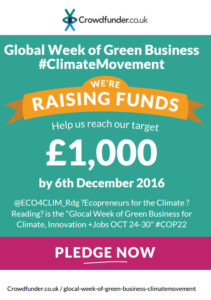
Get involved and become a sponsor for Ecopreneurs for the Climate in Reading

@ECO4CLIM_Rdg Join the Ecopreneurs for the Climate in Reading “Glocal Week of Green Business for #Climate, #Innovation + #Jobs OCT 24-30”


This is going live in the U.K. in October 28th!

Whether you are a student or an Ecopreneur, whether you are a free-lancer or work in an SME, or even in a large company, as long as you believe change is possible; our contribution makes a true difference for the people and the planet. This is your movement – Inclusive, diverse, fun and transformative. Your generous contribution to this campaign will, in a few years, develop 50 labs across the world / empower more than 500 ecopreneurs / generate 3,000 green jobs and directly avoid hundreds of tons of CO2 emissions into the atmosphere.

How can you join?

The 2016 edition “ECO4CLIM_Rdg” will take place on October 24-30, 2016. It will comprise of multi-stakeholder eco-innovation workshops and the Climate Champion Awards. **Save the Date28 Oct** ECO4CLIM_Rdg’s coordinators, climate-champion ecopreneurs and global partners participate in prestigious international forums the likes of CLIMATE CHANCE WORLD SUMMIT in France, the Women Leaders and the Global Transformation Summit, the #COP22 Climate Summit in Morocco, or SwitchMed Connect 2016 in Barcelona. Now is the time, participate, add your city or join our ecosystem of partners:

Looking to unlock Reading’s green potential. We will, in three weeks, seek to locate and highlight eight local climate innovations (Eco-preneurs)! Do not hesitate to put forward to us yours or any local low-carbon Innovation that can reduce Reading’s Greenhouse gas emissions footprint!

!Green entrepreneurs for the #Climate, the Global Week of Green Business and the Climate Movement – October 24-30, 2016 #ECO4CLIM16 Climate organiser for #ECO4CLIM_Rdg Please let us know if you like to be trans-boundary involved. We are looking for – Space partner, – Media partners, – Sponsors and – Enablers for Reading Climate Champion Awards 2016 – Email eco4clim @ cccrdg .org .uk

We warmly welcome you to participate in the ECO4CLIM_Rdg Event – Climate, Innovation +Jobs “Glocal Week of Green Business and the #ClimateMovement” Friday 28th October.

eco4clim16


Feel free to pledge-as-you-feel to get UK’s first Climate LAB started 🙂

https://www.crowdfunder.co.uk/join-the-ecopreneurs-for-the-climate-in-reading


Habitat III Conference in #Quito in October 2016 should show territorial coherence

totheworld2

Congratulations to the Netherlands parliament’s brave decision to close down their coal industry. 

Thank you to #ClimateChance and partner for organising this important stakeholder event in Nantes.

Thank you, to the Habitat III Panel discussing the #NewUrbanAgenda (NUA) in this climate forum – “On the road to Habitat III, what is the place for proposals from non-state actors?” (28/09/16, 9-11 am)

It was mentioned that 15 of the paragraphs of the New Urban Agenda addresses cities and climate change. Economic growth and development is mentioned as many times! While half the world is trying to stop the petroleum companies from drilling activities.. These two polarised position doesn’t match!

The NUA’s responsibility is to make cities divest from fossil energy and reinvest in urban sustainable opportunities.

We stress the importance of the use of funds mobilized by climate action, both mitigation and adaptation, for the development of sustainable cities and rural territories, considering that the New Urban Agenda that will be adopted by the UN member States during Habitat III Conference in Quito in October 2016 should show territorial coherence respecting the various global challenges we face.

In the agreed Habitat III document we need a paragraph about urban degrowth and protecting our green belts, shrinking cities,, There should even be a shut-down paragraph of cities and how to rewild shut-down cities.
https://www2.habitat3.org/bitcache/97ced11dcecef85d41f74043195e5472836f6291?vid=588897&disposition=inline&op=view

What is the really the views of the on the new data driven UN-cities concept?

Is the Habitat III agenda about smart purpose driven cities or is Habitat III trying to create a city in city?  When it comes to stakeholder’s engagement and multi-actor governance, this is urgent;

·        Keep it simple

·        Implementation, Implementation, Implementation

·        Build back better

What is the military’s stakeholder role in the new urban agenda? Military reserves for urban capability building in a peaceful world.

How will the new urban agenda leaver with liberté, égalité, fraternité? Maybe it’s time to change city development to “opportunité de villes”!

Wouldn’t we prefer to see purpose-driven agenda, with one purpose to sustain, all urban human activities..

“Proud to be on the list of the “Nantes Declaration of climate actors” signatories that will be presented in Quito during Habitat III”


http://www.climatechance2016.com/en

http://www.climatechance2016.com/uploads/media/5800c65beb61c.pdf

Planners – White LED Blue Light and its effect on Humans and Wildlife Habitat

WORLDWIDE LED RESPONSIBILITY

Light affects our health and well-being in many ways. White LED’s with blue-rich spectra are being rolled out over the country at an alarming pace, often without proper health or environmental impact assessments. These white LED’s are detrimental to human and wildlife circadian rhythms as well as the view of our night sky. 1,2,3 , Urgent action is needed to ensure installation of LED lights use a warm-white Correlated Colour Temperature (CCT) ideally 2700K for the benefit of Public Health, Ecology, Road Safety, and Sky Glow.

BLUE_LIGHT

“Lighting planners and policymakers in local government nowadays need to be very careful in choosing the light class as low as possible, in order to avoid unnecessary over sizing, in using Constant Light Output for luminaires, avoiding cold temperature of LEDs and, above all, seizing the importance of using lighting control systems. The good thing about LEDs is that you can dim and switch on/off easily, and this raises the importance of sensors.”~#Alan2016

There are currently very few solutions that successfully combine an understanding of the physiological effects of light with efficiency and aesthetics. Recently, a number of governmental and non-governmental organisations have provided interesting publications which should be taken into consideration to help ensure benign, safe, and pleasant lighting in our outdoor environment. 4,5,6

The American Planning Association (APA) recommends outdoor LED lighting exclude wavelengths below 500 nanometers. The International Dark Sky Association (IDA) recommends a CCT of maximum 3000K to minimise sky glow and the American Medical Association (AMA) has issued guidelines recommending that blue-rich light is reduced as far as possible in order to protect Public Health.

The American Planning Association (APA) recommends outdoor LED lighting exclude wavelengths below 500 nanometers. 5 The International Dark Sky Association (IDA) recommends a CCT of maximum 3000K to minimise sky glow and the American Medical Association (AMA) has issued guidelines recommending that blue-rich light is reduced as far as possible in order to protect Public Health. 7,8,9,10 In the UK, Public Health England are recommending that councils use a warm colour temperature for street lights to miminise glare and discomfort. 4 Unfortunately, street lighting is currently exempt from the UK nuisance regulations which limit the effects of light and noise on people. Due to a lack of clear guidelines from Central Government, notably the Department for Transport, councils often opt for blue-rich white LED street lights, thus increasing light pollution.

An example may be taken from the situation on the Isle of Wight, where high CCT LED outdoor lighting has been installed, and there was little or no public consultation nor any trials prior to implementation. 11 Reading Borough Council is currently planning to install streetlights with a CCT of 4000K, which is above the recommended level of 2700K, despite awareness of Public Health England having advised otherwise. 12 In contrast, best practice of lighting implementation can be found in Cardiff and Westminster Council. In 2014, the Campaign to Protect Rural England (CPRE) sent out a survey which collected responses from over 80 local authorities. CPRE has published a document which provides 9 key recommendations based on this evidence and other evidence directly collected by CPRE. 6

The scientific understanding on the visual and non-visual effects of light forms a strong basis of the recommendations to minimise glare and to minimise spectral intensity below 500nm from artificial night time light.1,2,3,13,14,15,16

In 2014, the Campaign to Protect Rural England (CPRE) sent out a survey which collected responses from over 80 local authorities. CPRE has published a document which provides key recommendations based on this evidence and other evidence directly collected by CPRE:

“It should be clear to planners that outdoor lighting has a multitude of often detrimental effects on the built and natural environments as well as on our health. If existing standards are not adjusted to account for the spectral characteristics of the LED lighting being created and promoted by the lighting industry today, we could, ironically, be faced with higher levels of light pollution, glare, and overlighting…The choice is clear: we can use responsible standards to guide lighting design, or we can continue to allow uncontrolled lighting to degrade our quality of life and negatively impact human health and ecology. Planners have important roles to play in making the former scenario a reality in their communities.” – Bob Parks, APA 5

“Local authorities should give careful consideration to the type of LED lighting they use and consider the potential impacts that higher temperature blue rich lighting has on ecology and on human health… New street lighting should be tested ‘in situ’ before a lighting scheme is rolled out across a wider area to ensure that it is the minimum required for the task and does not cause a nuisance to residents.” – Emma Marington, CPRE 6

The scientific understanding on the visual and non-visual effects of light forms a strong basis of the recommendations to minimise glare and to minimise spectral intensity below 500nm from artificial night time light.

“A National Policy to curb blue-rich light pollution is urgently required”~


– Ms Tanja Rebel and Mr Enrico Petrucco, Reading UK


All references have been provided as free, full access, internet-accessible sources wherever possible.

  1. http://dx.doi.org/10.1371/journal.pone.0067798
  2. http://www.dynamics.org/~altenber/PROJECTS/MAUI/STARRY_NIGHTS/ARTICLES/Falchi+Cinzano++Haim_limiting.2011.pdf
  3. http://www.johanneroby.net/uploads/3/0/8/8/30887717/lptmm2015-manage-roby.pdf
  4. Public Health England, http://www.lightmare.org/docs/PHE-CIBSE-SLL_LED_report_May2016HRLBL-b.pdf
  5. APA, http://volt.org/wp-content/uploads/2014/09/PAS-Memo_MayJune2014_cr.pdf
  6. CPRE,  http://www.cpre.org.uk/resources/countryside/dark-skies/item/download/3497
  7. IDA, http://bit.ly/28L65Us
  8. IDA guide, http://darksky.org/lighting/led-practical-guide
  9. AMA, http://bit.ly/1XZzsz3
  10. AMA statement, http://www.ama-assn.org/ama/pub/news/news/2016/2016-06-14-community-guidance-street-lighting.page
  11. https://isleofwight.greenparty.org.uk/files/IsleOfWight/Street-lighting-are-we-in-the-dark.pdf
  12. http://www.reading.gov.uk/media/5523/Item-1A/pdf/Item01A.pdf
  13. http://www.sps.ch/en/articles/various-articles/ueber-den-einfluss-des-lichtes-auf-den-menschen/lighting-application-for-non-visual-effects-of-light
  14. http://m.pnas.org/content/112/4/1232.full
  15. http://advances.sciencemag.org/content/2/6/e1600377.full
  16. http://www.sciencedirect.com/science/article/pii/S0022407313004792

Regional Government of Andalusia [PDF]
DECLARATION ON THE USE OF BLUE-RICH WHITE LIGHT SOURCES FOR NIGHTTIME LIGHTING


Additional Internet Links and Public Opinion:

https://fluxometer.com/rainbow/#!id=iPad%20Pro/6500K-iPad%20Pro<https://fluxometer.com/rainbow/#%21id=iPad%20Pro/6500K-iPad%20Pro

http://bizled.co.in/bright-bluish-white-leds-disrupt-sleep-says-us-medical-body

http://www.iac.es/adjuntos/otpc/International_Declaration_on_Blue-Rich_Light.pdf

http://www.concordmonitor.com/s-2985214

http://montrealgazette.com/news/local-news/opposition-calls-for-suspension-of-montreals-led-streetlights-project<http://montrealgazette.com/news/local-news/opposition-calls-for-suspension-of-montreals-led-streetlights-project

http://montrealgazette.com/news/local-news/montreals-push-for-outdoor-led-lights-isnt-just-a-night-sky-problem-its-unhealthy-scientists-warn

http://spie.org/newsroom/technical-articles/1015-led-light-pollution

http://www.getreading.co.uk/news/reading-berkshire-news/tilehurst-dog-walker-says-new-11220460

http://www.flagstaffdarkskies.org/for-wonks/lamp-spectrum-light-pollution

http://www.ledsmagazine.com/articles/print/volume-12/issue-10/features/street-lights/light-pollution-depends-on-the-light-source-cct.html

http://www.huffingtonpost.com/entry/streetlights-disrupt-sleep_us_56d51092e4b03260bf780136?ncid=tweetlnkushpmg00000067

http://uk.businessinsider.com/astronaut-photos-light-polution-led-nasa-esa-2015-8

THE HABITAT III INNOVATION and SUSTAINABILITY PRINCIPLE

Habitat III will Adopt, commit, implement, encourage, promote adequate investments, support, recognize, invite, underscore and promote sustainable urban innovation opportunities;

Innovation; promoting full and productive employment and decent work for all, ensuring decent job creation and equal access for all to economic and productive resources and opportunities; preventing land speculation; and promoting secure land tenure and managing urban shrinking where appropriate.

Effective, innovative, and sustainable financing frameworks and instruments, enabling strengthened municipal finance and local fiscal systems in order to create, sustain, and share the value generated by sustainable urban development in an inclusive manner.

Innovation, entrepreneurship, inclusion, identity and safety, and the dignity of all people, as well as to foster livability and a vibrant urban economy.

Develop vibrant, sustainable, and inclusive urban economies, building on endogenous potentials, competitive advantages, cultural heritage and local resources, as well as resource-efficient and resilient infrastructure, promoting sustainable and inclusive industrial development, and sustainable consumption and production patterns, and fostering an enabling environment for businesses and innovation, as well as livelihoods.

(Providing the labor force with access to income-earning opportunities, knowledge, skills and educational facilities that contribute to an innovative and competitive urban economy.) NON-SUSTAINABILITY Para 56

Promote an enabling, fair, and responsible business environment, based on the principles of environmental sustainability and inclusive prosperity, promoting investments, innovations, and entrepreneurship.

Sustain and support urban economies to progressively transition to higher productivity through high-value-added sectors, promoting diversification, technological upgrading, research, and innovation.

Adopt a smart city approach, which makes use of opportunities from digitalization, clean energy and technologies, as well as innovative transport technologies, thus providing options for inhabitants to make more environmentally friendly choices and boost sustainable economic growth and enabling cities to improve their service delivery.

Integrated planning that aims to balance short-term needs with long-term desired outcomes of a competitive economy, high quality of life, and sustainable environment. Strive to build in flexibility in our plans in order to adjust to changing social and economic conditions over time. Implement and systematically evaluate these plans, while making efforts to leverage innovations in technology and to produce a better living environment.

National, sub-national, and local governments to develop and expand financing instruments, enabling them to improve their transport and mobility infrastructure and systems, such as mass rapid transit systems, integrated transport systems, air and rail systems, and safe, sufficient and adequate pedestrian and cycling infrastructure and technology-based innovations in transport and transit systems to reduce congestion and pollution while improving efficiency, connectivity, accessibility, health, and quality of life.

Protective, accessible, and sustainable infrastructure and service provision systems for water, sanitation, and hygiene, sewage, solid waste management, urban drainage, reduction of air pollution, and storm water management, in order to improve safety against water-related disasters, health, and ensure universal and equitable access to safe and affordable drinking water for all; as well as access to adequate and equitable sanitation and hygiene for all; and end open defecation, with special attention to the needs and safety of women and girls and those in vulnerable situations. Seek to ensure this infrastructure is climate-resilient and forms part of integrated urban and territorial development plans, including housing and mobility, among others, and is implemented in a participatory manner, considering innovative, resource efficient, accessible, context specific, and culturally sensitive sustainable solutions.

Leveraging cultural heritage for sustainable urban development, and recognize its role in stimulating participation and responsibility, and promote innovative and sustainable use of architectural monuments and sites with the intention of value creation, through respectful restoration and adaptation.

The implementation of the New Urban Agenda requires an enabling environment and a wide range of means of implementation including access to science, technology, and innovation and enhanced knowledge sharing on mutually agreed terms, capacity development, and mobilization of financial resources, taking into account the commitment of developed countries and developing countries, tapping into all available traditional and innovative sources at the global, regional, national, sub-national, and local levels as well as enhanced international cooperation and partnerships among governments at all levels, the private sector, civil society, the United Nations system, and other actors..

Call on businesses to apply their creativity and innovation toward solving sustainable development challenges in urban areas, provide financial support, including through innovative financial mechanisms, to programmes and projects to implement.

(International multilateral financial institutions, regional development banks, development finance institutions, and cooperation agencies to “provide” financial support, including through innovative financial mechanisms, to programmes and projects to implement the New Urban Agenda, particularly in developing countries.) NON-SUSTAINABILITY Para 142

Need for enhanced cooperation and knowledge exchange on science, technology and innovation to the benefit of sustainable urban development, in full coherence, coordination and synergy with the processes of the Technology Facilitation Mechanism established under the Addis Ababa Action Agenda and launched under the 2030 Agenda for Sustainable Development.

Recognize the significant contribution of voluntary collaborative initiatives, partnerships and coalitions that plan to initiate and enhance the implementation of the New Urban Agenda, highlighting best practices and innovative solutions including by promoting co-production networks between sub-national entities, local governments and other relevant stakeholders.

Development of national information and communications technology policies and egovernment strategies as well as citizen-centric digital governance tools, tapping into technological innovations, including capacity development programmes, in order to make information and communications technologies accessible to the public, including women and girls, children and youth, persons with disabilities, older persons and persons in vulnerable situations, to enable them to develop and exercise civic responsibility, broadening participation and fostering responsible governance, as well as increasing efficiency.

Science, research, and innovation, including a focus on social, technological, digital and nature-based innovation, robust science-policy interfaces in urban and territorial planning and policy formulation, as well as institutionalized mechanisms for sharing and exchanging information, knowledge and expertise, including the collection, analysis, standardization and dissemination of geographically-based, community-collected, high-quality, timely and reliable data, disaggregated by income, sex, age, race, 21 ethnicity, migration status, disability, geographic location, and other characteristics relevant in national, sub-national, and local contexts.


Source: HABITAT III NEW URBAN AGENDA Draft outcome document for adoption in Quito, October 2016

Permafrost carbon−climate feedback is sensitive to deep soil carbon decomposability but not deep soil nitrogen dynamics

Here we show, using a carbon?nitrogen model that includes permafrost processes forced in an unmitigated warming scenario, that the future carbon balance of the permafrost region is highly sensitive to the decomposability of deeper carbon, with the net balance ranging from 21 Pg C to 164 Pg C losses by 2300. Increased soil nitrogen mineralization reduces nutrient limitations, but the impact of deep nitrogen on the carbon budget is small due to enhanced nitrogen availability from warming surface soils and seasonal asynchrony between deeper nitrogen availability and plant nitrogen demands. Although nitrogen dynamics are highly uncertain, the future carbon balance of this region is projected to hinge more on the rate and extent of permafrost thaw and soil decomposition than on enhanced nitrogen availability for vegetation growth resulting from permafrost thaw. This is grave!!!

Via M. Ohlinger post from Proceedings of the National Academay of Sciences of the United States of America
– http://www.pnas.org/content/112/12/3752.full

#Principle10 and the Bali Guideline – #NuevaAgendaUrbana

Principle10

Principle 10 and the Bali Guideline

Bali Guideline Implementation Guide Published

“Environmental issues are best handled with participation of all concerned citizens, at the relevant level.” UNEP has launched the Spanish-language version of its Guidelines to the Implementation of Principle 10 of the Rio Declaration. Principle 10 sets out three fundamental rights: access to information, access to public participation and access to justice, as key pillars of sound environmental governance.


Learn more here: http://www.unep.org/civil-society/Implementation/Principle10/tabid/105013/Default.aspx


Analysis – Rumour has it: Innovation lurks in the shadows of the #NewUrbanAgenda

This post has been in the making for a long time… in my head at least, if not on paper. I first thought I would write it after the civil society hearings for Habitat III in NY in early June, then postponed it until after the last round of inter-sessionals and informal negotiations at the end of June. But time was at a premium, and there was enough coverage, analysis and reflection from the Earth News Bulletin, Citiscope, Cities Today and Next City, so I didn’t feel I had much to add. Sure, it was an interesting process and one in which stakeholders felt included and heard and empowered… especially as several of our proposals, including a call to establish an International Multi-Stakeholder Panel on Sustainable Urbanisation, and the acknowledgement of the General Assembly of Partners, made it into the draft NUA released on 18 July, which formed the basis for negotiations in Surabaya.

Going in to PrepCom3, 25-27 July, we were offered a sense of hope by the co-facilitators, and key groupings of Member States, that an agreement would be reached on large sections of the NUA, if not the entire document, in Surabaya. This turned out to be a false aspiration, as we now know, as talks progressed in fits and starts, and ultimately stalled after almost 48 hours of nearly uninterrupted, exhausting negotiations. A new draft was issued on the 27th of July, setting off disgruntled murmurs among Member States about not being given adequate time to review it, and then yet another one on the 28th, at the end of the PrepCom, for them to take home, review and consult (look at all the different iterations here). It was agreed that they would reassemble in New York at unspecified dates, three to four weeks hence, to resume the discussions, so that, hopefully, an agreement can be achieved before Quito, and deliberations at the Conference can begin to focus on implementation (see Citiscope’s despairing article on the fragility of the process, also noting comments on why it is not as bad as it appears to be.)

The statements from Member States in the Main Committee and the revised versions of the document issued in the course of the Surabaya meeting had little to offer to stakeholders. Most of our proposals fell victim to a mass cull of elements that appeared to threaten status quo. Politics makes for strange bedfellows indeed. The US, EU and G-77 seemed to be in perfect harmony, for a change, for instance when they all called for deleting references to the General Assembly of Partners (GAP), ostensibly for different reasons, but obviously with the same result – a rejection of any attempts to expand stakeholder engagement in international processes, as well as the implementation of international agreements, beyond the usual suspects, whether a handful of New York-based major groups for the former (international process), or a few handpicked favourite NGOs and CBOs, for the latter (implementation). Several individual states expressed their support in private, but only offered ‘lukewarm defence’ of the proposition in the Main Committee, where it mattered.

This, and other developments, and a scan of the 28 July draft, set me thinking, and hence the title of this post – where is innovation in the New Urban Agenda? She does seem to be around, lurking in the shadows, occasionally making an appearance, desparate for recognition, but not making much headway in the absence of so much as a welcoming glance. Where will she find a home?

Let us begin with the process. Most people agree that the Habitat III process as it was conceived was fairly innovative – coming as it did at the heels of the generally satisfactory process of stakeholder engagement in the SDGs, it had to at least match that, if not go further. The 22 issue papers were led by UN agencies. The 10 Policy Units brought in the collective wisdom of 200 experts. Systematic stakeholder engagement was encouraged, which led to support for the Global Task Force (GTF), invited to lead the hearings of Member States with local authorities, and the General Assembly of Partners (GAP), facilitating the same for civil society stakeholders, in New York in June. This was remarkably different from the Major Groups system, not only in that it included many groups that didn’t find a voice, or at least, an equally loud voice, through the nine major groups, but also that it allowed a range of non-New York-based organisations and individuals to participate in the process, by offering them travel support. GAP is a self-organised platform of (now) 16 Partner Constituent Groups, with two co-chairs from different organisations, usually from different regions, and often gender-balanced. Overall, the 32 member GAP Executive Committee (about to be expanded to 34 as we have just welcomed our 16th Partner Constituent Group – Persons With Disabilities) includes 18 women and 14 men, from across all continents. Many of them have never engaged in high-level UN processes before. But they have all had an equal chance to articulate issues and priorities important to them and their constituencies, comprising at least 58000 organisations and networks, adding up to an outreach of nearly 1 billion people. They did this through stakeholder statements in the plenary sessions of all preparatory and intersessional meetings, written submissions, meetings with the Bureau, meetings with co-facilitators, interviews with media covering the process (see Rose Molokoane’s impassioned, articulate statement on grassroots’ inclusion here), language suggestions on successive drafts, and of course corridor chats and conversations over coffee and lunch. Limited time to make statements before Member States meant that very often, groups had to caucus and collaborate on joint statements. Shared google documents meant that people could comment on each other’s statements and reinforce key messages. A final, consolidated GAP statement was always offered, which highlighted common messages and exhorted Member States to remember why they had gathered in the room – to agree on how to realize sustainable, inclusive urbanisation for all urban and rural inhabitants, especially the most marginalized and vulnerable. Proposals from the GAP Partnerships document were offered, elaborated, rephrased, adjusted and debated inside and on the margins of the main meetings.

Many Member State representatives expressed their pleasant surprise at the level of organisation and coordination among stakeholders, one that is not often seen in the major groups system. The result, as I said before, was the inclusion of 3 of our 6 key propositions, and several key phrases and concepts critical to the various constituencies – right to the city, empowerment of local and sub-national governments, gender equality, youth empowerment, recognition of the contribution of grassroots groups and the informal economy, a clear emphasis on decent work, focus on essential public services, land, mobility, disasters and humanitarian crises, children in vulnerable situations, etc. – in the initial drafts of the New Urban Agenda. Process innovation, thus, also resulted in the inclusion of progressive content in the document.

The challenge, however, was to do this systematically – to identify the most progressive propositions from the Policy Unit reports, the declarations of regional and thematic meetings, and various submissions articulating positions of Member States and stakeholders – cluster and include them in the early drafts, or use them as a checklist for later versions once these had pulled apart, threadbare, by the negotiators. This systematization seems to have been a weak link, possibly hampered by the delayed appointment of the co-facilitators, multiple agendas being pursued within the 12-member Bureau, or an overstretched Secretariat. The absence of a clear justification for inclusion of key themes and proposals could also have been a contributing factor towards their exclusion.

Some of the most transformative propositions on implementation, follow-up, monitoring and review, also came from stakeholders. The one that received most attention, and survived the longest in the document, was to establish the multi-stakeholder panel on sustainable urbanization, as mentioned earlier in this post. It created discussion, member states asked fundamental questions, forcing GAP, which had made the proposal, to think deeper and refine its own proposition, look for precedence and examples, and explore the institutional and administrative implications of the panel. Yet, they failed to be convinced. G-77 felt, perhaps unknowingly encouraged by UN-Habitat itself, that setting up and independent knowledge platform would weaken the normative agenda of the organization that they were trying to strengthen. The US ruled it out on account of potential resource requirements. Most surprisingly, the European Union also failed to agree within its own coordination to support it, in the belief that it might actually strengthen UN-Habitat… or perhaps they have another agenda (rumour has it that a proposal for setting up a new UN cities agency, an alternative to UN-Habitat located somewhere in western Europe, is ready, and an announcement imminent). Anyway, after a tough fight, in the 28 July edition of the New Urban Agenda, the Panel was eliminated from the document.

The panel, however, was not the only creative proposal put forth by stakeholders. One of the criticisms of the implementation of the Habitat Agenda of 1996 was that it wasn’t systematically monitored or reviewed. To address this, stakeholders presented two ideas. First, that all monitoring and reporting on the NUA involves stakeholders, and uses disaggregated, quantitative and qualitative data and evidence, including case studies and good practices, collected from the bottom-up, to complement official national statistics. And second, that the World Urban Forum, which meets biennially and is arguably the most important and inclusive global gathering of urban thinkers, practitioners and advocates, is strengthened and transformed into an arena for multi-stakeholder reporting on the implementation of the New Urban Agenda. Stakeholders have advocated that WUF, which usually spans five days, be split into two parts – one where there is a freewheeling exchange of ideas and innovations, and one where a broad range of actors including national, sub-national and local governments, and the entire spectrum of stakeholders – for an illustration look at the 16 PCGs of GAP here – voluntarily report on the progress made in the implementation of the NUA. These proposals, too, made their way into the initial drafts, but have been significantly diluted since – the first one because it challenges national governments’ vice-like grip on data and statistics, and the second because it is (once again) conflated with the issue of strengthening UN-Habitat and its initiatives (including the World Urban Forum).

In addition to the above, GAP also suggested that realizing a sustainable urban future needed a break from business as usual, and that innovative ideas coming from all possible sources – local governments, grassroots, civil society, professionals, research and academia, business and industry, among others – must be harnessed. Nothing new or dramatic there. But its proposal of setting up a Partners’ Lab (or Labs) for Urban Sustainability, to test ideas and approaches and prototypes before scaling them up, didn’t make much headway, possibly because of perceived resource implications. The New Urban Agenda thus does not offer any mechanisms to encourage, support or mainstream innovative practices for sustainable or inclusive urbanization.

So here we are, back from Surabaya, en route to Quito, via New York. Most of those who read the Surabaya draft of the New Urban Agenda will agree that it is not a bad document. The structure is acceptable, the declaration has significantly improved over time, the vision could be bolder but it is not entirely uninspiring. It has all the key ingredients for sustainable urbanization, sprinkled across the document. It is concise and though the language is often a bit loose, especially in the view of academics and professionals, it is not incoherent. So, it’s a “good enough” document, once that will allow all of us to align whatever we do with “provisions of the New Urban Agenda.”

But, it is also important to recognize that the language of the New Urban Agenda is not progressive, failing to raise the bar on process, themes, implementation arrangements, or monitoring, leaving that task to yet-to-be agreed processes to emerge organically sometime in the undetermined future. This is a particularly important missed opportunity for a non-binding document, which offers the unique possibility of moving beyond the norm, pushing the boundaries of the envelope beyond “agreed language”. In our case, recognizing the inclusion of sixteen different constituencies in the process of development of the NUA, and more importantly, potentially in the urbanization process over the next twenty years, would be a quantum leap over focusing on the “HABITAT Agenda Partners” (a legacy of Habitat II, 1996) and equally, over the established major group system which offers limited accessibility and engagement opportunities to diverse stakeholders based in different corners of the globe. Setting up an international panel on sustainable urbanization, an IPCC-type body but one that involves not just scientists but all stakeholders, which elevates urbanization to the highest level of political priority while at the same time making it a household concern, would help move the discourse forward by leaps and bounds. Multi-stakeholder monitoring systems would for the first time ensure that the power of data, information, evidence, is shared by all, not manipulated by a few. And the Declaration of a Decade of Sustainable Urbanisation would help bring many many initiatives together under a common umbrella, helping to maintain the focus on this mega-trend with its associated mega-challenges over the next ten years.

But alas, as I said, innovation has no friends this particular room, among Member States negotiating the most important global agreement on sustainable urbanization, with implications for the next two decades and beyond.

Thankfully, however, she continues to flourish on the ground, away from the noise in the Main Committee, often driven by stakeholders, local authorities and UN-Habitat’s staff who go quietly about their business. The agency’s work on rolling out the International Guidelines on Urban and Territorial Planning is supplemented by field-based planning labs in several cities across the world. Housing and land continue to be strong areas of focus. National Urban Policies are in great demand. Public space and protection of the commons is an important priority. The City Prosperity Initiative shows the way in monitoring SDG 11. Field-based deployments are expand and strengthened – think Syria, Iraq and Afghanistan (not for the faint-hearted), or Nepal and Ecuador (not for those looking for a standard, cookie-cutter approach to post-crisis (??) recovery and reconstruction), or India and South Africa (not for those who cannot manage an incredibly challenging political environment). Diverse requests from various international bodies, cities, regions and countries, on policy and operational matters related to planning, housing, governance, economic development, legislation, etc., are addressed and managed on a regular basis. Old partnerships are deepened, new ones readily explored. Indeed, UN-Habitat’s normative strength is reinforced by its extensive work in the field, in collaboration with a wide range of stakekeholders, across 60+ countries. No other organization – so far – has demonstrated the same combination of expertise, skill sets, experience or reach, required to coordinate and drive the implementation of the New Urban Agenda.

Not supporting the UN agency which has the most extensive and long-standing experience in urban development, the confidence of stakeholders, the support of local authorities, and one that has regularly reinvented itself to meet the challenges of the times, grappling with a broad mandate, growing demand and declining resources, is in my view yet another missed opportunity in the HABITAT III process and the New Urban Agenda. No doubt that UN-Habitat needs change, and in some ways a fresh approach, but recent appointments in its senior management indicate that it may have turned a corner, and should send a positive signal to donors and partners. Like a phoenix, it may yet rise again to assume its legitimate role and responsibility in driving and coordinating the global effort towards sustainable urbanization, even with a “good enough” New Urban Agenda. The stakeholders are certainly keeping their fingers crossed.

/Shipra Narang Suri
Vice-President at General Assembly of Partners/ Habitat III